What if someone tried to sell your land, and you had no idea?
It sounds far-fetched. It isn’t. The FBI has documented property owners discovering their vacant land was being sold—or had already been sold—after seeing a For Sale sign, finding construction equipment on the property, or even trying to pay their property taxes. Read the FBI’s warning about vacant land fraud.
Beginning October 1, Alabama is adding new safeguards aimed at seller impersonation and title fraud.
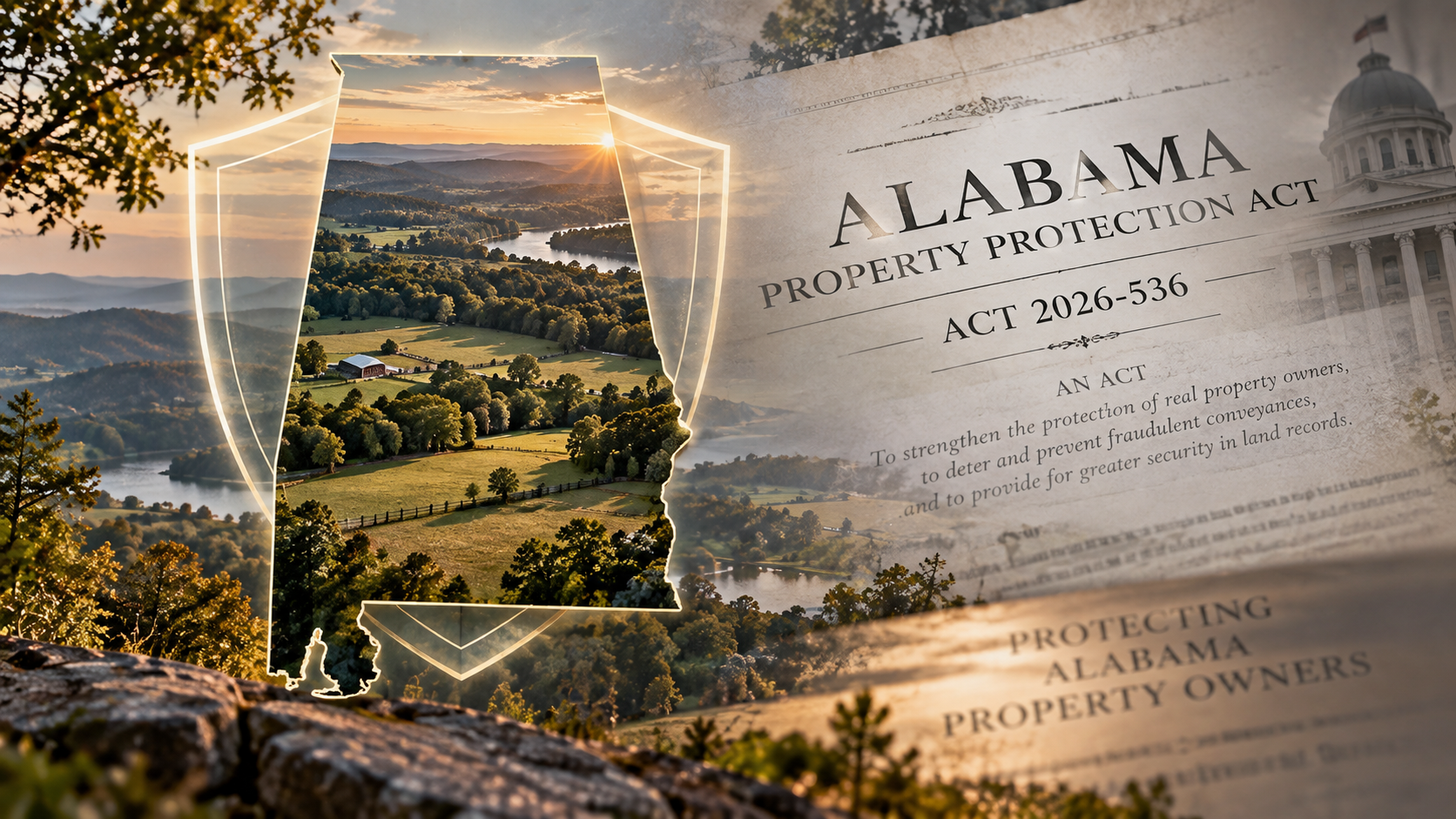
The Alabama Property Protection Act of 2026 (Act 2026-536) creates new verification requirements and remedies designed to make it harder for someone to list or transfer property they don’t own.
Why Land Can Be a Target
Selling property remotely isn’t unusual anymore. We sign electronically, communicate by phone and email, and sellers may live hundreds of miles away.
That’s convenient for legitimate owners. Unfortunately, it’s also convenient for someone pretending to be one. The FBI says scammers have used fake IDs, deeds, documents and even fake notary stamps. They can also learn enough about a property through online research to answer ordinary questions correctly.
Vacant land presents an obvious opportunity: no one is living there to notice a sign in the yard, and property without a mortgage may have fewer parties involved in the transaction.
A Land Inquiry That Made Me Stop
I received an inquiry about a substantial piece of Georgia land from someone claiming to be the owner. At first, it looked like a listing lead. Then things stopped adding up.
The name didn’t match what I was finding. Property details and phone information raised questions. I kept asking for identification and information that would let me verify who I was dealing with.
I couldn’t verify it, so I didn’t take the listing.
Instead, I located the actual owners and mailed them a letter letting them know someone had contacted me about selling their property. I can’t say it was fraud because it never progressed far enough to prove that. But I didn’t need to prove a crime to know something wasn’t right.
“I’d rather lose a listing than ignore something that doesn’t make sense.”
An agent I know had an even stranger experience. Someone contacted the agent claiming to own a property. Much of the information checked out, but the agent still had concerns and eventually contacted the real owner.
The real owner operated a daycare, and there were children in the background during their call. There had also been children in the background when the person claiming to be the owner called.
The agent believed AI had been used to make the impersonation more convincing. I can’t independently verify exactly what technology was used, but the lesson matters:
Something sounding real is no longer proof that it is real.

What the Alabama Property Protection Act Changes
You don’t need to read a legal briefing to understand the important parts.
Unknown remote sellers. If an Alabama real estate licensee doesn’t know the purported seller and isn’t meeting them in person, the licensee must obtain government-issued identification and documentation of ownership before entering into the listing agreement.
Higher-risk transactions. Vacant land, non-owner-occupied property and property without a mortgage receive additional identity and ownership verification by the settlement agent before closing.
Fraudulent listings. The Act adds verification procedures for certain online listings and increases criminal penalties for specified fraudulent real estate activity.
If property is fraudulently transferred. The Alabama Securities Commission can investigate complaints and determine whether a conveyance resulted from fraud. The law also provides additional remedies, including an expedited quiet-title process and a recovery mechanism for qualifying victims.
Property alerts. The Act expands a framework that allows Alabama counties to participate in a free property-owner notification system for recorded land documents connected to an owner’s name or property.
Want to read it yourself?
Alabama Securities Commission — Alabama Property Protection Act
Alabama REALTORS® — Alabama Property Protection Act of 2026
How I Screen Land Sellers From the First Conversation
The new law formalizes protections around verification. For me, that diligence starts with the first conversation—not at the closing table.
- Confirm the owner. The name provided should match the ownership information available in county records.
- Confirm the property. Acreage, parcel details and location should line up with what I’m being told.
- Verify identity and authority. Identification and ownership documentation may be necessary before moving forward.
- Pay attention to inconsistencies. Names, phone numbers, contact information or answers that don’t line up deserve a closer look.
- Don’t force a transaction forward. If I can’t verify who I’m dealing with, getting the listing isn’t more important than figuring out why.
For a legitimate seller, those extra questions aren’t a hurdle. They’re another layer of protection for the property they own.
A call can sound legitimate and still deserve verification.
Public records, electronic communication and increasingly convincing technology make it easier for someone to know details about a property. Verification matters more—not less—in a digital transaction.
AI Makes Diligence Even More Important
Someone asking whether you still own a parcel, whether it’s vacant, whether there’s a mortgage, where you live or whether you might sell could be asking perfectly legitimate questions.
But if a conversation feels strange, you don’t owe a stranger a complete profile of you and your property.
And if someone claims to be an agent, attorney or title company, verify that person independently before sending sensitive documents.

5 Ways Alabama Landowners Can Protect Their Property
- Keep your deed and ownership records handy. Know exactly how the property is titled.
- Ask your county probate office about property-record alerts. Availability varies by county.
- Keep your contact information current, especially if you live out of state.
- Look out for your neighbors. If you see unexpected signs, surveyors or construction on property you know isn’t being sold, call the owner. The FBI recommends having nearby people who can alert absentee owners to suspicious activity.
- Don’t be offended when professionals verify you. If you’re selling remotely and your agent or closing professional asks for identification and ownership documents, remember why.
Before I Market Land, I Want to Know What I’m Marketing
Photography, pricing and marketing matter. But first I want to understand the property.
Who owns it? What does the deed show? Does the acreage match? How is it accessed? Are there surveys, easements, restrictions or ownership issues we need to address?
My background in mortgage lending and real estate taught me to pay attention to the documentation behind a transaction, not just what’s visible on the surface.
If something doesn’t add up, we figure out why before we keep moving.
Frequently Asked Questions
When does the Alabama Property Protection Act take effect?
October 1, 2026.
Does the Act apply to vacant land?
Yes. The Act applies across property types, and vacant land is among the higher-risk transactions subject to additional verification before closing.
Can I sell Alabama land if I live out of state?
Yes. Selling remotely is common. If the licensee doesn’t know you and you aren’t meeting in person, expect identity and ownership documentation to be required before the listing agreement is executed.
How do I get alerts about activity involving my property?
The Act provides a framework for counties to participate in a free property-owner notification system. Check with the probate office in the county where your property is located to determine what’s currently available.
What if my property is fraudulently transferred?
The Act establishes a complaint and investigation process through the Alabama Securities Commission and provides remedies for qualifying fraudulent conveyances, including an expedited process for clearing title.
Thinking About Selling Alabama Land?
If you own vacant land, inherited property, family acreage or Alabama property while living somewhere else, selling remotely doesn’t need to be scary. It does need to be handled carefully.
I’ll help you understand the property, prepare it properly and answer the important questions before we ever put it in front of buyers.
Talk With Starla About Your Alabama LandOne Last Thought
Remote transactions aren’t going away. Neither are electronic signatures or AI. That means property owners, agents, attorneys, title professionals and even neighbors have to look out for one another.
If something feels off, ask the extra question.
And if you’re selling remotely and someone asks you to prove you’re really the owner? That’s a good thing—because you want them to ask the person pretending to be you, too.
This article is provided for general informational purposes and is not legal or title advice. The Alabama Property Protection Act takes effect October 1, 2026. The Alabama Securities Commission states that it is developing processes, rules and forms for implementation. Property owners dealing with suspected fraud, a fraudulent conveyance or title concerns should consult the appropriate government agency and a qualified legal or title professional.
© 2026 Starla Trainor | Bridle & Bay | Real Broker, LLC | Florida • Georgia • Alabama | Equal Housing Opportunity
Leave a Reply