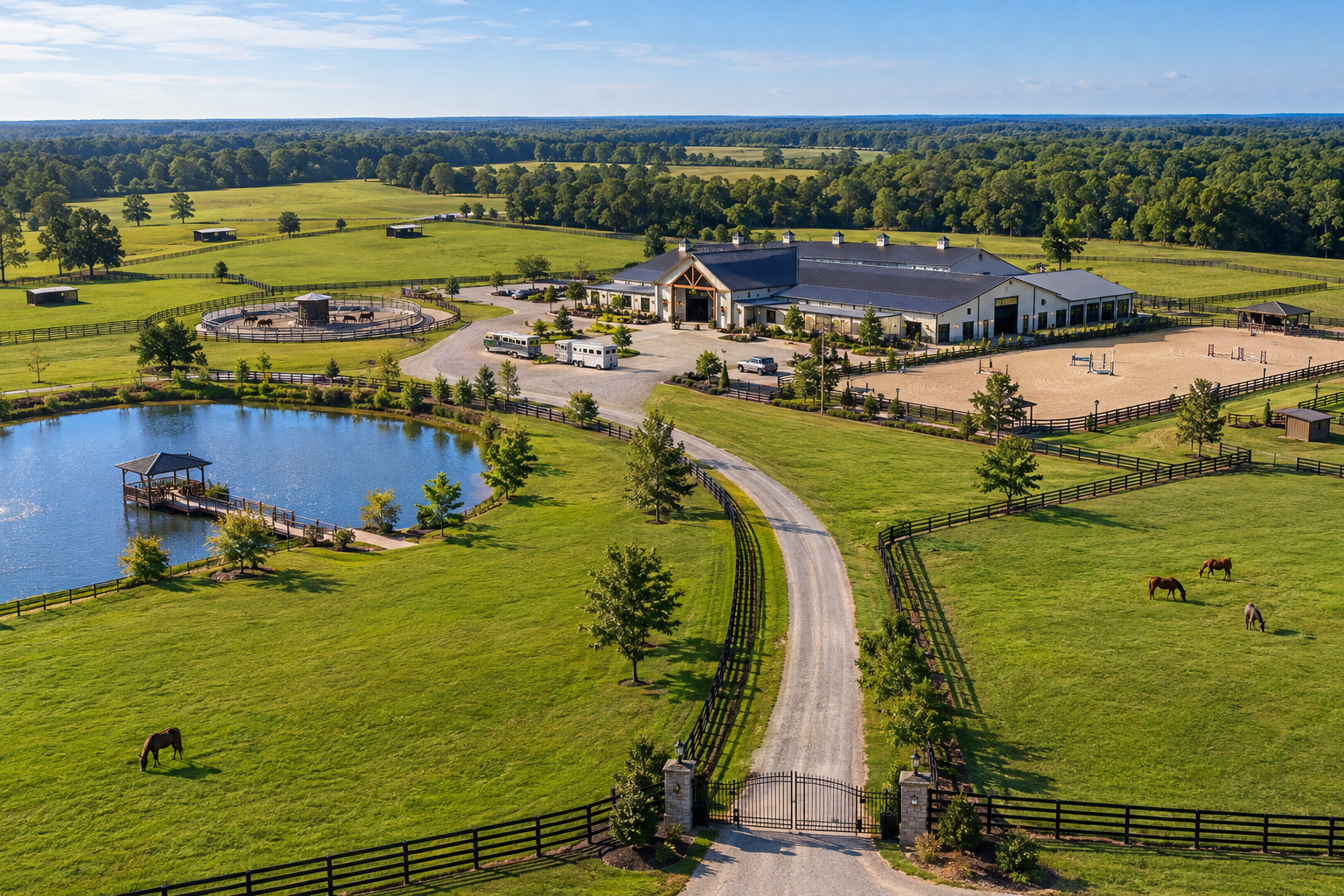
Some properties require you to think three moves ahead before they ever hit the market.
A $2+ million horse farm I represented in North Alabama was one of them. Beautiful property. Serious equestrian improvements. A very specific buyer pool. And before we ever launched the listing, I already understood something that would shape everything that followed: this was not going to be a conventional residential mortgage transaction.
So we planned accordingly. We talked through the realistic ways a buyer could purchase the property, what my seller would consider if creative financing came into the conversation, and how those possibilities affected the buyers I needed to reach.
Owner financing eventually became part of the sale—but the real strategy happened long before we needed it.
I believe in putting the cards on the table early. If we can see a potential complication coming, I would rather understand our options now than discover them halfway to closing.
For privacy, I’ve intentionally left out the address, exact sale price, financing terms and identifying details of the parties.
The Money Conversation Started Before the Marketing
With over 20 years of experience in mortgage finance, negotiation and sales, I tend to look at the financial side of a transaction early. Not because I’m financing the property—I’m not—but because understanding the financing landscape tells me a lot about the buyers we need to reach and the obstacles we may need to plan around.
For this horse farm, we knew our realistic lanes from the beginning:
- a cash buyer,
- specialized non-QM or private financing,
- possibly farm lending if the buyer and property fit the program, or
- creative financing if the right structure made sense for both parties.
That was enough. We did not need to keep revisiting the financing question. We needed to use what we already knew to shape the sale.
On a specialized horse property, the financing strategy and the marketing strategy are connected. Understanding how the buyer may purchase it helps determine who the buyer is likely to be.
Horse People Don’t Shop for Farms Like Typical Homebuyers
This is also where being an equestrian matters.
Most horse people I know are not walking through the front door wondering about the kitchen first. We want to see the barn. We want to walk the pasture. We want to know whether the fencing makes sense, where the water is, how a trailer gets in and out, what the footing is like and whether the whole setup actually works.
We notice things other buyers may completely overlook:
- stall size, airflow and barn layout,
- tack, feed and hay storage,
- pasture quality and cross-fencing,
- water access and drainage,
- arena size, footing and usability,
- trailer access and turnaround,
- and how much work—or money—it will take to make the property fit our horses.
The house matters, but in many equestrian purchases it is not where the decision starts. The barn, land and horse amenities are where we spend an enormous amount of our time and money. Understanding that changes how I evaluate a horse farm, how I present it and which details I make sure another equestrian actually sees.
The Right Buyer May Be Thousands of Miles Away
A serious equestrian buyer may care far more about finding the right setup than staying inside one ZIP code—or even one state. For the right horse property, buyers may be thousands of miles away.
That means the marketing has to travel too. I want strong real estate exposure, but I also want the property reaching equestrian buyers, farm and land audiences, relocation buyers, agents with horse-property clients and people specifically searching for what this farm offers.
That mattered here. The buyers ultimately came from out of state. Once we found them, the question became whether we could structure a deal that worked for them without losing sight of the seller I represented.
Owner Financing Was a Tool—Not the Whole Strategy
Owner financing can sound much more mysterious than it really is. At its core, the seller agrees to receive some portion of the purchase price over time instead of receiving every dollar at closing.
But there is no single owner-financing template. Depending on the situation, the seller might carry a substantial balance, finance only a portion of the purchase, or potentially hold a second mortgage behind another lender if that lender and loan program allow it.
The negotiation may include:
- how much money comes to the seller at closing,
- how much remains financed,
- interest rate and payment amount,
- amortization,
- maturity or balloon date, and
- how the seller’s financial interest will be protected.
That is what I mean by creative financing. We are not trying to make a deal complicated for the sake of being clever. We are looking at the pieces available and determining whether there is a responsible structure that works.
The advantage wasn’t simply having an owner-financing option. It was understanding our options before we needed them.
Then the Deal Had to Make Sense for My Seller
I represented the seller, so once owner financing became part of the conversation, my job was not simply to figure out what the buyers wanted. The terms had to work for my client.
That means looking beyond purchase price. How much money does the seller receive now? How much remains outstanding? For how long? What happens if payments are missed? How is the obligation secured? What legal documents are needed? Are there tax or insurance considerations?
My mortgage finance background helps me recognize those moving pieces quickly. My role as the Broker Associate is to negotiate the real estate terms, protect my seller’s position within that negotiation and make sure the appropriate attorneys, tax professionals, lenders and insurance professionals are involved where their expertise is needed.
Creative financing should be creative. It should never be careless.
The Horse Property Itself Still Has to Make Sense
Financing is only one layer. Horse farms can also be difficult to compare because two properties with similar acreage and similar homes may function completely differently for an equestrian buyer.
A well-designed barn, established pasture, quality fencing, usable arena, water, access and other improvements can represent a tremendous investment. Horse people understand what it costs—in money, labor and time—to recreate those things.
An appraiser determines appraised value. My responsibility is different: know the property I am representing, understand the improvements, document them accurately and be prepared with useful information when questions arise.
If You’re Buying or Selling a Horse Farm
If You’re Buying
- Understand your financing options early.
- Evaluate the barn and land as carefully as the house.
- Think about daily horse care, not just pretty listing photos.
- Be willing to search farther for the right setup.
If You’re Selling
- Know the likely buyer before you market.
- Show the equestrian improvements properly.
- Decide whether creative terms are even worth considering.
- Get the property in front of buyers far beyond the immediate market.
The Interesting Part Isn’t That We Used Owner Financing
The interesting part is that we were prepared to recognize the right solution when it appeared.
We understood the property. We understood the equestrian buyer. We understood the financial landscape. We marketed beyond the immediate area, found out-of-state buyers, negotiated from the seller’s side of the table and worked through the structure until we reached closing.
That is where my experience comes together. I understand horse properties because I live the equestrian lifestyle myself. I understand the financial side because of more than 20 years in mortgage finance, negotiation and sales. And as a Broker Associate, I bring those pieces together to help my clients make informed decisions without making an already complicated transaction feel more complicated than it needs to be.
Horse Farms · Land · Luxury · Lifestyle
Buying or selling a horse farm or specialty property? Start with someone who understands both the property and the transaction behind it.
Visit Bridle & BayHorse Farm Buying & Selling Questions
Can a seller finance only part of a horse farm purchase?
Yes. Depending on the transaction, a seller may potentially finance all or only part of the purchase price. The structure should be reviewed by the appropriate legal, tax, lending and insurance professionals.
Why does a horse farm need different marketing?
Equestrian buyers often prioritize barns, pasture, fencing, arenas, water, access and functionality differently from typical residential buyers. They may also be thousands of miles away, so targeted equestrian and relocation exposure can matter.
What should a seller decide before listing a high-value horse farm?
Understand the likely buyer, the property’s equestrian features, the marketing reach required and whether creative terms are something you would ever consider. Knowing those answers early makes future negotiations much easier.
Leave a Reply