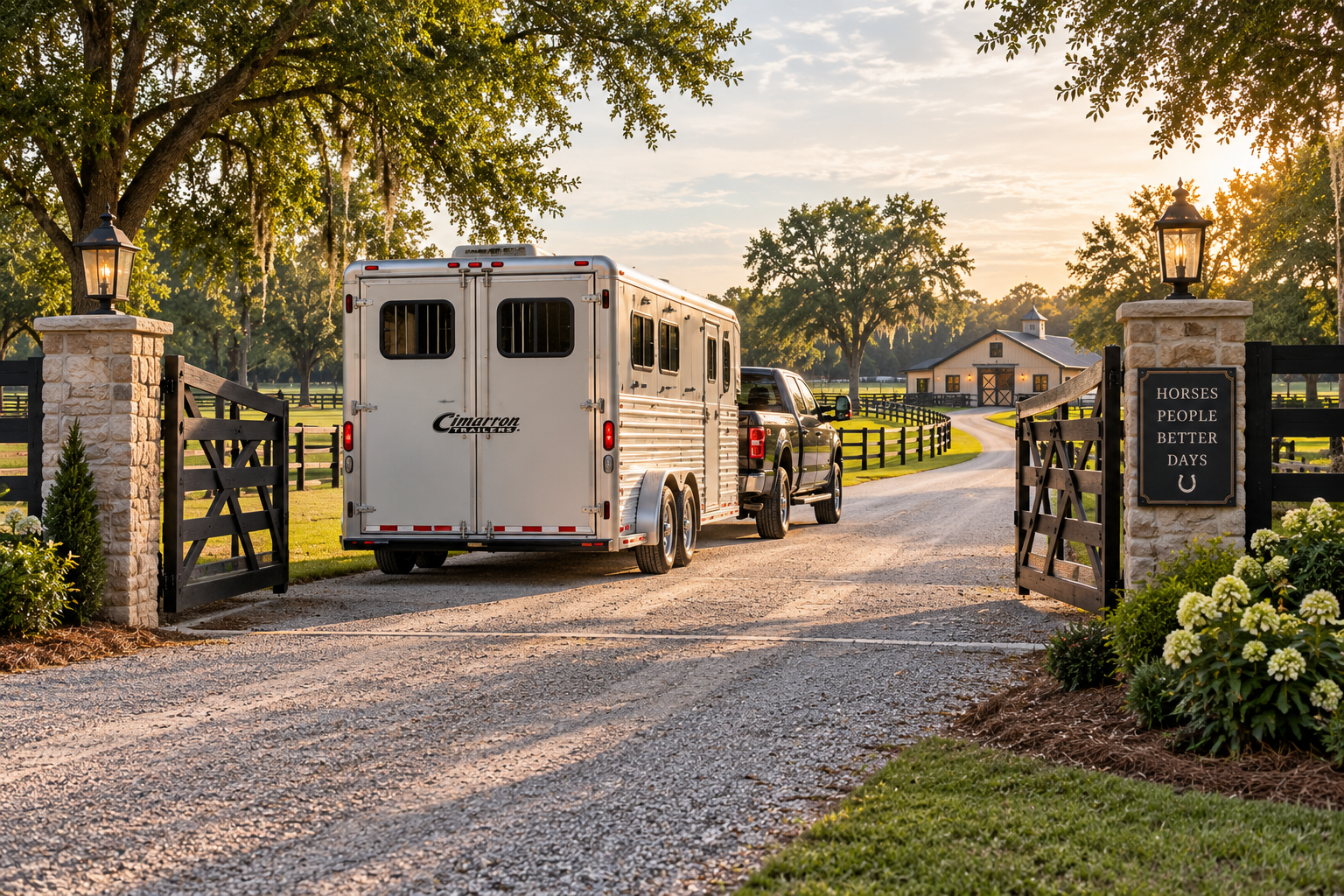
A horse-property buyer may start evaluating your property before they ever see the house.
Can they comfortably get a truck and horse trailer down the road and through the entrance? How much of the acreage is actually usable? What kind of fencing is in place? Where is the water? How does the barn function? What happens after a hard rain?
Those details matter because a horse property isn’t simply a house with acreage. Buyers are evaluating the home, land and equestrian infrastructure together—and the features that matter most can change depending on how they intend to use the property.
- Make sure a truck and horse trailer can comfortably access the property.
- Evaluate usable pasture, fencing, water and drainage—not acreage alone.
- Clean and repair the equestrian infrastructure you already have before adding expensive new features.
- Document major improvements, including what was completed, when and what it cost.
- Market how the property actually functions for horses instead of simply advertising “horse property.”
Start Where a Horse Buyer Starts: At the Road
One of the first things I notice when I pull up to an equestrian property is access.
I’m looking at the road leading to the property, the entrance and the driveway. Could I navigate them comfortably with a horse trailer? Is there enough room to turn around? What size trailer could reasonably use the property?
Horse trailers come in very different sizes, from smaller bumper pulls to much larger goosenecks. A beautiful barn becomes less practical for a buyer if getting horses safely in and out of the property is difficult.
Before listing, walk the route as if you’ve never been there before. Look for low limbs, narrow entrances, difficult turns, gates that don’t open wide enough and areas where a trailer could struggle to maneuver.
A horse buyer may start evaluating your property before they ever step inside the house.
Usable Acreage Matters More Than the Number on Paper
“Ten acres” doesn’t tell an equestrian buyer nearly enough.
How much is open? How much is wooded? How much is fenced? What does the pasture look like? Is part of the acreage steep, wet or otherwise difficult to use? How is the property divided?
The amount of pasture a horse property can support varies with factors such as soil, environment and management practices. Total acreage and functional horse acreage aren’t necessarily the same thing.
The University of Minnesota Extension’s horse pasture planning guide is a useful resource for understanding pasture layout, gates, water and dry-lot considerations.
For sellers, this means your marketing should explain the land rather than simply state the acreage.
Look at Your Fencing Through a Buyer’s Eyes
After I notice the open space, I’m looking closely at the fencing.
What type is it? Wood, vinyl, electric, woven wire or another system? What condition is it in? How are the pastures and paddocks divided? Where are the gates?
A seller doesn’t necessarily need to replace an entire fencing system before listing. But broken boards, sagging sections, overgrowth that hides the fence line and gates that don’t function properly deserve attention.
Visibility and function matter. The University of Minnesota Extension recommends considering safety, visibility, containment and maintenance when evaluating horse fencing and notes that gate placement and equipment access are part of a functional pasture design. Their horse-fencing guide explains those considerations in more detail.

Your Barn Is More Than a Backdrop
A pretty barn photograph isn’t enough. An equestrian buyer is going to want to understand how the infrastructure functions.
I look at the number and size of stalls, stall construction and footing, ventilation, tack and feed storage, water access, electrical service, sheds and other outbuildings.
If there are mats, concrete, clay or another stall base, document it. If you’ve made meaningful electrical, plumbing, drainage or structural improvements, gather those records too.
Then clean the barn as if a serious horse person is coming—not as if you’re trying to make it stop looking like a barn.
Remove cobwebs. Clean the stalls. Organize the tack and feed areas. Put equipment away. Clear clutter from aisles and entrances. Fix obviously broken hardware.
You don’t need to erase every sign that horses live there. You want buyers to be able to see how well the facility works.
An Arena Isn’t Just an Arena
If your property has an arena, round pen or another area for working horses, describe more than its existence.
What are the dimensions? What is the footing? How does it drain? Is it lighted? Covered? Fenced? When was the footing installed or refreshed?
And here’s something sellers sometimes overlook: not every equestrian buyer evaluates the same facility the same way.
A hunter/jumper buyer may be thinking about the size and suitability of a riding arena differently from a dressage rider. Someone focused on reining may place greater emphasis on footing and the suitability of the riding surface for that discipline. A recreational horse owner may prioritize turnout, trails or pasture differently again.
Ask a different question: How useful is this feature to the buyers most likely to consider this property?
The $30,000 Improvement Question
Horse people know how quickly property improvements add up.
Stall fronts, fencing, footing, arenas, water systems and barns can represent substantial investments. It’s understandable for a seller who spent $30,000 on stalls to expect buyers to recognize that $30,000 investment.
But cost and market value are not automatically the same thing.
The improvement’s condition, usefulness, quality, local market and the needs of likely buyers all matter. An improvement that is particularly desirable to one discipline may carry less importance for another.
That doesn’t mean the investment should be ignored. It means we need to document it accurately, understand it and position it appropriately instead of simply adding its original cost to the asking price.
This Is Where Having the Right Agent Matters.
Selling a horse property isn’t just about marketing the house and mentioning the barn. Someone needs to understand what they’re looking at—the trailer access, usable acreage, fencing, stalls, footing, water, drainage, riding areas and the improvements you’ve made—and know which details actually matter to an equestrian buyer.
I specialize in equestrian, land and lifestyle properties across Florida, Georgia and Alabama. As both a real estate professional and a horse person, I look at these properties differently because I understand that buyers aren’t simply shopping for acreage. They’re evaluating whether the property can actually work for the way they live with their horses.
Keep an Improvements Record Before You List
This is one of the simplest things a horse-property owner can do, and I strongly recommend it.
Create a spreadsheet or organized file documenting major property improvements. Include:
- what was completed;
- when it was completed;
- what it cost;
- contractor or vendor information when available;
- receipts and invoices;
- permits or plans when applicable;
- dimensions and specifications; and
- photos or other supporting documentation.
For an equestrian property, that might include barn construction or renovation, stalls, fencing, arena construction and footing, drainage improvements, water systems, electrical work and significant outbuildings.
This documentation does not guarantee a dollar-for-dollar adjustment in an appraisal. What it does is create an organized record of improvements and property features that can be accurately communicated during the transaction.
Why Appraisal Preparation Deserves Attention
Equestrian properties can be more complicated to evaluate than a typical residential property, particularly when the property includes substantial acreage, barns, arenas, fencing or other specialized improvements and there are fewer truly comparable sales nearby.
That’s another reason I want sellers to keep good records.
My background in mortgage finance also makes me particularly attentive to this part of the transaction. Documentation isn’t about telling an appraiser what a property must be worth. The appraiser is responsible for an independent opinion of value. It’s about making accurate information about the property and its improvements available rather than relying on someone to reconstruct years of property history from memory.
Keep the receipts. Keep the dates. Keep the specifications. Keep the story of what you improved and when.
Don’t Forget Water and Drainage
Water access is one of the things I want to understand when I’m evaluating a horse property. Where are the troughs or automatic waterers? How conveniently can horses access water from the different turnout areas? How is the barn supplied?
Then there’s drainage.
Where does water collect? What happens around gates after heavy rain? Does the arena drain properly? Are there consistently muddy areas around the barn, paddocks or entrances?
These aren’t glamorous listing features, but they affect how a horse property functions every day. Good marketing shouldn’t hide those practical considerations. It should understand them.
What Should You Actually Fix Before Listing?
You don’t necessarily need a major renovation.
If I had 15 minutes with a seller before leaving a horse-property consultation, I would start with a clean sweep.
- Clean and organize the tack room.
- Clean the stalls and barn aisle.
- Remove cobwebs.
- Trim overgrowth around barns, gates and fence lines.
- Make the fencing visible.
- Repair obvious broken boards and damaged sections where practical.
- Clear the driveway and trailer-access areas.
- Organize equipment and remove unnecessary clutter.
- Make sure the property’s best equestrian features can actually be seen in photographs and during showings.
I would rather see a seller make the existing property clean, functional and understandable than spend thousands of dollars installing a feature simply because someone thinks every horse buyer wants it.
Photograph How the Property Functions
Beautiful photography matters, but an equestrian listing needs to do more than show a beautiful house and a horse standing beside a fence.
The photographs should help a buyer understand the property.
Show the entrance and driveway. Show the relationship between the barn and pastures. Show the fencing and gates. Show stalls, tack and feed areas, water access, arena or round pen, sheds and other meaningful infrastructure.
Aerial photography can be particularly helpful when it shows how the acreage, paddocks, barns and riding areas relate to one another.
And don’t make the buyer guess about dimensions and specifications that you already know. If the arena has known dimensions, say so. If the barn has six stalls, say so. If pastures have water access, explain it accurately.
Market the Property to More Than One Kind of Horse Person
One of the mistakes I see in the way horse properties are described is treating “equestrian buyer” as though it were one type of person. It isn’t.
A property’s existing setup may naturally appeal more strongly to certain disciplines or uses, but good marketing should describe the actual features clearly enough for buyers to decide how those features fit their needs.
That means talking about measurable, useful things: arena dimensions and footing, pasture and paddock layout, fencing, stalls, storage, trailer access, water, riding areas, acreage and infrastructure.
The goal isn’t to declare that a property is perfect for every horse owner. It’s to make sure the right buyers can recognize what is there.
Your Horse Property Deserves More Than a Standard Listing.
Before you replace fencing, renovate the barn or spend thousands preparing your property for market, let’s determine what buyers are likely to notice, what deserves attention and what already makes your property worth talking about.
I help horse-property sellers across Florida, Georgia and Alabama position the home, land and equestrian infrastructure as one complete property—not as a house with a few horse features added to the description.
Talk With Starla About Your Horse PropertyBridle & Bay | Real Broker, LLC • Florida • Georgia • Alabama
The Bottom Line
The best preparation for selling a horse property isn’t making it look like nobody has ever kept a horse there.
It’s making the property clean, functional, well documented and easy for an equestrian buyer to understand.
Start at the road. Look at access. Walk the fencing. Evaluate the usable acreage. Understand the barn, water, drainage and riding areas. Gather your improvement records. Then make sure the marketing tells the property’s real story.
That’s how you give buyers enough information to recognize not just that you own acreage with a barn—but how the property can actually work for horses.
This article provides general real estate and property information and is not appraisal, legal, tax, lending, engineering, zoning or other specialized professional advice. Property conditions, market factors, regulations and financing requirements vary. Consult the appropriate qualified professional or local authority for guidance specific to a property or transaction.
© 2026 Starla Trainor | Bridle & Bay | Real Broker, LLC | Florida • Georgia • Alabama | Equal Housing Opportunity